
Where women grow under the shelter of the Almighty.
What is The Ruby Tent?
Do you crave meaningful connections with other Christian women?
Are you seeking a supportive community where you can grow spiritually and find encouragement on your faith journey?
Do you want access to exclusive resources and events designed to uplift and empower you?
If you answered 'yes' to any of these questions, then you belong in The Ruby Tent!
Click below to start your journey with us.
The Ruby Tent is an online learning community for Christian women. We have an interactive online discussion forum, weekly emails, and discounts to our online Bible Studies and books.
Have you recently trusted Jesus as your Lord and Savior?
We would love to know!
We also have a small gift for you.
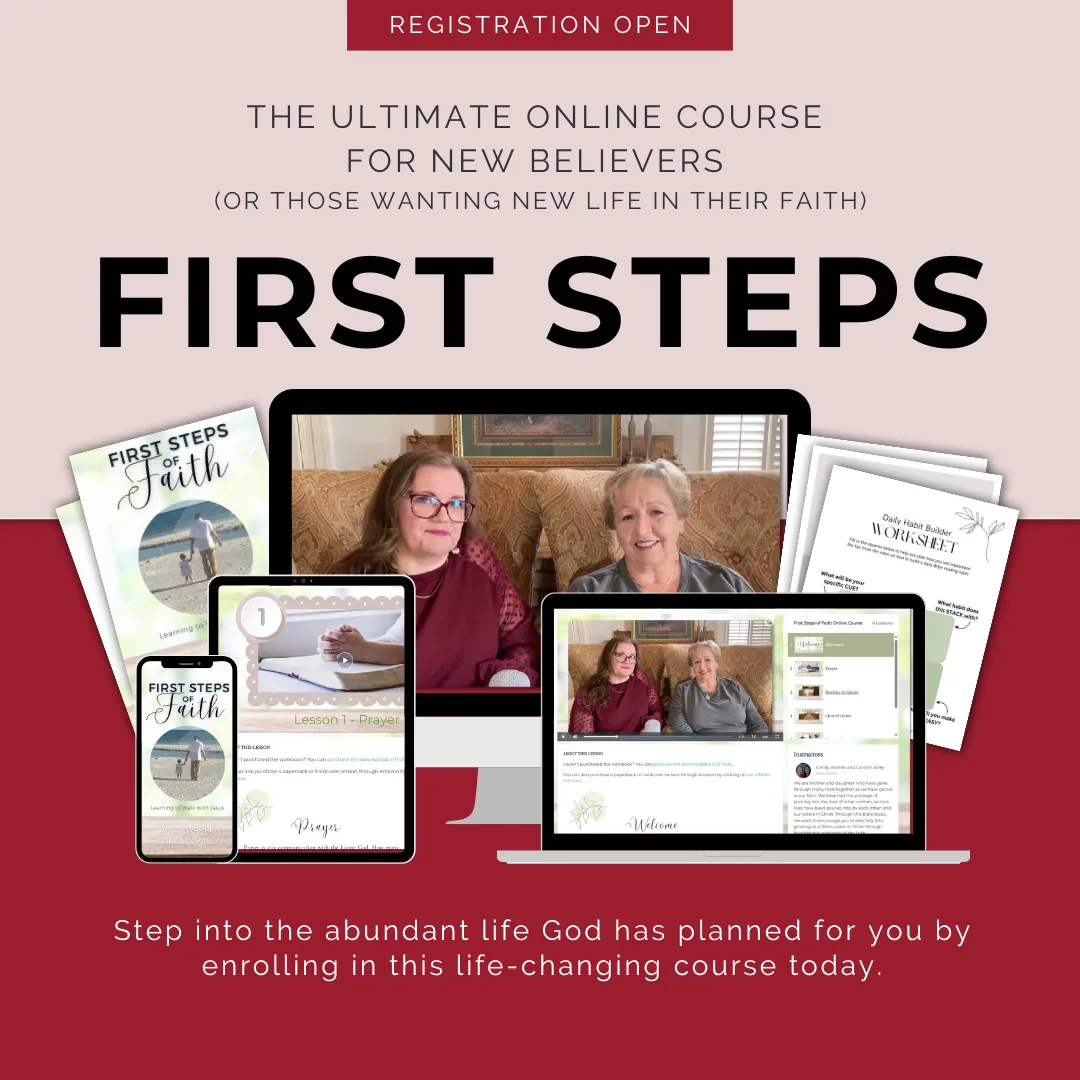
Wondering what steps to take next?
Does your faith need new life?
Have you accepted Jesus as your Savior, but aren’t sure what comes next? Should you start going to church, reading your Bible, praying? How do you even do any of that?
Sister - I got you!
Let me show you the first steps you need to take as you begin your walk with Jesus. Allow me the honor of walking with you and pouring into you as you discover the aspects of faith that will build a solid foundation. Jesus said in Matthew 7:24-27 (NIV), “Therefore everyone who hears these words of mine and puts them into practice is like a wise man who built his house on the rock. The rain came down, the streams rose, and the winds blew and beat against that house; yet it did not fall, because it had its foundation on the rock. But everyone who hears these words of mine and does not put them into practice is like a foolish man who built his house on sand. The rain came down, the streams rose, and the winds blew and beat against that house, and it fell with a great crash.”
Following Jesus is the way to build your life and your faith on that solid foundation. The foundation that will help you weather all of life’s storms.
If you want that strong foundation, then you need this Bible study! Join me for this 4-week FREE course on how to build your life on that foundation by following Jesus.
FREE Online Bible Study
Choose Your Year in the Word
Three clear paths. The same faithful God.
Reading Scripture consistently isn’t about finding the perfect plan—it’s about choosing a path you’ll actually walk. Whether you want to read the Bible from beginning to end, see how God’s story unfolds in real time, or anchor your daily faith in the life of Jesus and the wisdom of Scripture, there’s a year-long study here designed to meet you where you are.
Each study offers a steady, Scripture-centered rhythm to help you stay rooted in God’s Word throughout the year. Click on the one that fits this season of your life, and let the Word do the shaping from there.

Read-a-long!
Join us in reading the
Book of John!
You will receive a daily email with the chapter to read for the day, along with a Bible Study using our T.E.N.T. format. You can also join the conversation in a private Facebook group.
This course is currently FREE, so sign up TODAY!
Want to be a
Proverbs 31 Woman?
Did you know that she was not who you were talk she was? She was a businesswoman and a leader! But if you truly want to know how to lead like the Proverbs 31 woman, you need to understand the wisdom of Proverbs.
In this 31-day study, we are walking through the Book of Proverbs, one chapter a day. Digging deep and learning to walk in wisdom.

Are you a momma heartbroken over your child's rejection of God?
The Ruby Tent was born out of my journey back to faith. I felt God leading me to share my story of redemption from homosexuality. My mom and I faced many struggles during my time of rebellion, but through God’s grace, we learned to heal and overcome our flesh to love each other. This powerful transformation led me back to God, and now we’re using our story to support other mothers whose children have turned away from their childhood faith.
Our signature course, “Love God’s Way,” is designed to bring healing and hope to heartbroken mothers by demonstrating practical ways God calls us to love those who disagree with us, even if they are our adult children. Leading this course live was such a full circle moment for us, as we poured into other moms the lessons we learned, hoping they might avoid the depth of heartache we experienced.
Join us in this course, and experience that hope for yourself!
What do we offer at The Ruby Tent?
Online Courses
Printed Bible Studies
Community
We offer online courses with downloadable resources and membership in community with other sisters in Christ.
We offer traditionally printed Bible studies and devotionals, perfect for individual study or small group study.
New Bible Study
Coming Soon!
FREE DOWNLOAD
Headline that hooks people in, gets them excited and makes them want to sign up.

ARTICLES AND STORIES
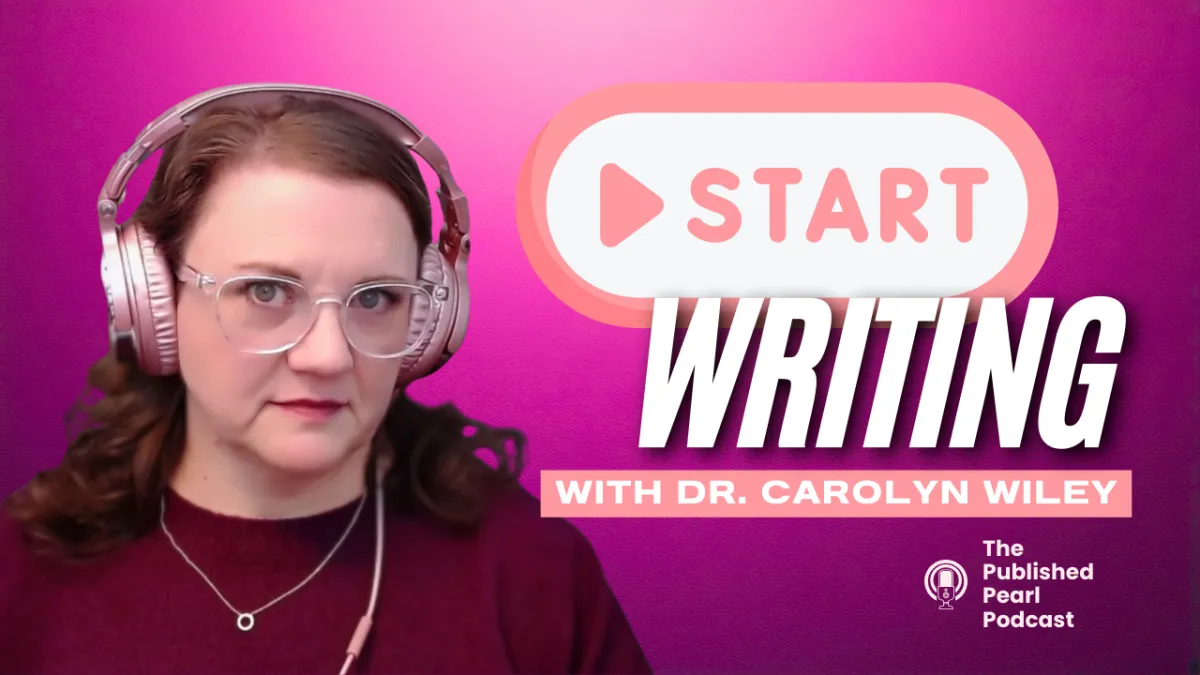
How to Start Writing a Signature Book When You’re Already Leading a Business
How to Start Writing a Signature Book When You’re Already Leading a Business
You started writing a book, but it is still sitting in a draft on your computer, hidden away among the other files and project ideas you haven’t gotten to yet.
When you come across it, you pause. All the memories and great ideas resurface. The desire to see your name on the cover warms your spirit — but only for a moment — before the overwhelm takes over. Before the voice in your head starts reminding you of the laundry list of other projects that need to be finished before you can even THINK about stopping long enough to write a book.
If you are anything like me, you also begin to spiral into shame around why you haven’t finished this book yet. That this is yet another unfinished great idea you had and didn’t execute on.
Let me tell you something that may lift that weight immediately:
You are not failing at writing a book.
You were never taught how to build one.
Why Writing Your Book Feels Bigger Than It Should
There is a reason your book project feels so big — so sprawling and demanding — like something you could only possibly finish if a publisher handed you a generous advance and you disappeared to a quiet mountain cabin for three uninterrupted months with steaming cups of tea and no responsibilities calling your name.
And that reason has nothing to do with your schedule.
It is not because you are too busy. You have always been busy. You built your business while being busy. You’ve launched programs, led teams, managed clients, navigated family life, and executed on goals that most people only talk about. Busyness has never stopped you before.
It is also not because you lack discipline. You know how to finish things. You have proven that over and over again. When there is a clear outcome, a defined deadline, and a structured plan, you move.
And it certainly is not because you simply “need to sit down and write.” If that were true, you would already have a finished manuscript. You sit down and write all the time — emails, sales pages, curriculum, content. Words are not new territory for you.
The real reason your book feels so big is because you are trying to execute without a framework.
And more time will never solve that problem.
More time without structure does not produce a book. It produces a longer season of confusion.
Most high-capacity leaders begin the same way. The desire to write has often been there for years — sometimes since childhood. But it gets postponed while you build credibility, grow your platform, and serve your clients. Writing a book feels important, but not urgent, so it stays in the “someday” category.
Until one day you see someone — someone with less experience, less depth, or fewer years in the industry — announce their book launch. And something inside you says, “That should be me.”
So you open a document.
You begin pouring your ideas onto the page.
At first, it feels energizing. There is movement. There is creative spark. There is momentum. You can almost see it taking shape.
But within days, sometimes within hours, the document begins to feel less like progress and more like clutter. Ideas stack on top of one another without hierarchy. Introductions get rewritten. Sections multiply. Notes to yourself accumulate in the margins. You experiment with a title. You open Canva and design a cover mockup that excites you for about twenty minutes before you start second-guessing it.
And then, almost instinctively, you close the file and return to what you call your “real work.”
For someone who executes at your level, incompletion is uncomfortable. It feels foreign. Even threatening. You can lead a team and generate income — why can’t you finish this one thing that should be simple? After all, you write constantly.
And because there is no structure around the project, the easiest way to relieve the tension is to postpone it.
So the narrative quietly shifts from “I’m writing a book” to “This just isn’t the right time.”
But every time a colleague announces their new release, every time you see a launch campaign or a book signing or a speaker bio that includes the word “author,” it feels like a punch in the gut.
The Real Problem: You Were Never Taught the Stages
The deeper issue here is not motivation. It is not discipline. It is not even confidence. The real problem is much simpler than that.
You were never taught that writing a book has stages.
Think about how you were trained to write in school. The topic was given to you. The audience was defined — your teacher. The assignment parameters were clearly outlined. You were told how many pages, what format, when it was due. Your job was to respond. And you learned to respond well.
If you were strong academically, you likely learned how to research, how to organize your thoughts, how to argue a position. But even then, you were still responding inside a structure that someone else built for you.
You were never responsible for designing the assignment itself.
Then you moved into business.
And business trained you in execution.
You learned how to take an idea and move it forward quickly. You learned how to launch, how to build, how to iterate. Speed became an asset. Momentum became a muscle.
When something needed doing, you moved.
And as a person of faith, church reinforced another layer of wiring: obedience requires action. When you sense something is placed on your heart, you move toward it. You do not overthink it. You do not stall. You step forward.
None of those lessons are wrong. They are the very things that have made you effective.
But none of them taught you how to design a book.
No one explained that a signature book — the kind that cements authority, strengthens positioning, and integrates seamlessly into your business — unfolds in distinct phases.
No one showed you that before there is drafting, there is design. Before there are chapters, there is assignment. Before there is a manuscript, there is structure.
So when you feel the need to write your book, you default to the only model you have ever known: you open a document and begin responding.
Of course you do.
That is what you have always done when something mattered.
But a signature book is not a reaction. It is infrastructure. And infrastructure does not begin with pouring concrete at random spots on a field hoping it becomes the foundation for a house. It begins with blueprints. With measurements. With intentional design.
You would never build a house by starting with drywall. You would never launch a program without mapping the transformation first. You would never hire a team member without clarifying the role.
Yet when it comes to a book, we assume words should come first.
And when they do not organize themselves into something coherent, you blame yourself.
The issue was never your ability to write.
The issue was that no one told you there were stages.
And once you understand that there are stages — and that each stage has a purpose — the entire project stops feeling mysterious and starts feeling manageable.
Because now, instead of reacting, you are building.
Assignment Before Rough Draft
This is where most leaders unintentionally sabotage themselves — they move too quickly into the visible part of the process before they have built the invisible foundation. And movement without direction eventually turns into frustration.
When I use the word “Assignment,” I do not mean a vague sense that you feel called to write. That nudge absolutely matters. I believe in responding when something is placed on your heart. But obedience and strategy are not the same thing. And when something is entrusted to you — especially something that will carry your name, your voice, and your authority — it must be stewarded carefully, not scribbled impulsively.
Assignment requires you to slow down long enough to answer the questions you were never trained to ask.
Who is this book actually for? Not “leaders” in general, not “people who need encouragement,” but the specific person who is already drawn to your work, who is already wrestling with a problem you are uniquely positioned to address.
What transformation is this book responsible for? When someone closes the final page, what must be different about their thinking, their conviction, or their action because they read it?
How does this book integrate into your business and leadership? Is it meant to qualify someone for your highest-level offer? Is it meant to shorten the nurture cycle? Is it meant to open doors to rooms that are currently closed to you?
And perhaps most importantly, why now? Why this message in this particular season? What is happening in your business, your industry, or the culture that makes this the right time for this book?
Until those questions are answered, your draft will feel chaotic — because it is chaotic.
Not because you lack clarity as a thinker. You would not be where you are today if you could not articulate ideas clearly.
Not because you are incapable of writing. You write constantly.
But because the container has not been built.
When you take the time to define the assignment first, something shifts almost immediately. The fog begins to lift. The message tightens. The chapters do not feel like random collections of insight anymore; they begin to reveal themselves in order. You stop feeling the pressure to say everything you know, because you understand what this particular book is responsible for — and equally important, what it is not responsible for.
That clarity alone reduces the overwhelm by half.
And then — and only then — do you move into Rough Draft.
Now you are not writing to discover what the book might become. You are writing to construct something you have already designed. The draft still requires effort. It is still imperfect. But it is no longer chaotic in the same way, because it is being built inside a defined structure.
And that is the difference between wandering through pages and building a book.
Why Drafting Feels Different After Clarity
Once Assignment is clearly defined, the process becomes easier. You are no longer staring at a blank page asking, “What should this book be?” That question has already been answered. You are no longer trying to prove that you have something valuable to say. That has already been established. You are no longer attempting to pour your entire body of knowledge into one document in hopes that something coherent will form.
Instead, you are building toward something specific.
The draft will still be messy. It should be messy. First drafts are not meant to be refined. They are meant to exist. But now the mess has context. It has boundaries. It has a job.
And because you understand that job, the mess no longer threatens your identity.
When you begin drafting without structure, every awkward paragraph feels like evidence that you are not cut out for this. Every half-formed thought feels like a personal deficiency. The chaos feels like a reflection of your capability.
But when you draft inside a defined Assignment, the mess simply becomes part of construction. It is no more alarming than sawdust on the floor of a workshop. It is evidence that something is being built.
You are not wandering from idea to idea, hoping a theme will emerge.
You are constructing, one intentional section at a time.
You know which room you are in. You know what that chapter must accomplish. You know what belongs there and what does not. Ideas that once felt urgent can now be set aside for a future book because you understand that this book has a defined responsibility.
Instead of dumping insight into a document and hoping a book emerges, you are deliberately assembling something that has direction, purpose, and function within your broader leadership.
That is the difference between writing a book and building one.
And once you experience the stability that comes from building instead of spilling, you will not want to return to the old way of starting with a blank page and sheer willpower.
Because now you know what makes the process sustainable.
And sustainable always wins over sporadic inspiration.
The Hidden Cost of Waiting Another Year
At some point, we have to acknowledge that this conversation is bigger than personal expression.
Yes, writing a book can be creatively fulfilling. Yes, it can feel deeply meaningful to see your message in print. But if you are already leading at a high level, this is not simply about checking a bucket-list item.
This is about leverag
There are four-figure and five-figure speaking opportunities that will not say yes without a book attached to your name. Event organizers are not just looking for good communicators; they are looking for visible proof of authority. A book signals that your ideas have been developed, organized, and sustained long enough to fill pages — not just posts.
Look at how major conferences position their speakers. At events like the Global Leadership Summit or Catalyst Conference, speaker bios frequently highlight published works. The book becomes part of the credibility marker. It communicates depth, staying power, and thought leadership before the speaker ever steps onto the stage.
It is not that the book makes you intelligent.
It is that the book makes your expertise tangible.
And beyond stages, there is the client journey.
High-ticket clients do not make emotional decisions alone; they make trust-based decisions. They are investing at a level where they need reassurance that you have done the work, that your thinking is cohesive, that your philosophy is not scattered across years of content.
A book accelerates trust in a way no Instagram carousel, no email sequence, and no podcast snippet ever will. It allows someone to sit with your thinking for hours. It lets them see how you reason, how you build arguments, how you lead them from problem to solution. That depth shortens nurture cycles and strengthens conversions.
Even one missed opportunity — one speaking invitation that never comes because your authority is not yet consolidated, or one client who chooses someone else because they feel more “established” — can represent a five-figure loss.
And over the course of a year, that adds up quietly.
This is not about chasing money for money’s sake.
Revenue is often a signal of impact. If someone pays you $5,000 to speak, it is because they believe your words will generate far more than $5,000 in value for their audience. The compensation reflects perceived influence.
A book strengthens that signal.
It says, “This leader has done the work to articulate what they know.”
It gives form to your authority.
And when authority has form, opportunity multiplies.
Start With Structure
If you know you are called to write, the issue is not time.
It rarely is.
You have built businesses in busy seasons. You have led teams in full calendars. You have carried vision alongside responsibility before. The presence of activity has never disqualified you from executing something important.
What you are missing is not hours.
It is containment.
It is structure.
It is knowing what needs to be decided before you ever type the first paragraph so that the project does not sprawl beyond your control.
That is exactly why I created the Write Start Guide. It walks you through the Assignment stage — the part most leaders skip — so you stop trying to build a book without a blueprint. Instead of staring at a blank document and hoping clarity arrives mid-sentence, you will define the container first.
You can download it here: 👉roseandpearl.net/getstarted
And if you want to see this clarity process unpacked in more depth, I walk through it step by step in this episode of The Published Pearl. In the episode, I explain why Rough Draft cannot come before Assignment, how structure changes your relationship with the mess of writing, and what shifts when you approach your book as infrastructure rather than inspiration.
Before you open another blank document, watch the episode.
Let the framework settle.
Then build.
Then draft.
Because you do not start writing a book.
You build one from a plan.
And once the plan is clear, writing becomes the simplest part of the process — not the heaviest.
If you would rather think it through together, schedule a clarity call. We will look at your positioning, your backend, your audience, and the actual role a book would play inside your ecosystem. No pressure. Just strategy.
📅 Book a clarity call here: https://roseandpearl.net/booking
You are already leading at a high level.
A strategically written book simply ensures the marketplace recognizes the authority you’ve been carrying all along.
✍️Already writing, but struggling to stay consistent or finish?
If you know what you want to say but find yourself stuck, second-guessing, or starting and stopping, Write It Anyway is for the author who is ready to build momentum and complete the manuscript.
This is where clarity turns into pages.
🕊️Want ongoing guidance as you write and publish your book?
The Published Pearl Newsletter is where I share weekly insight on writing, publishing, and stewarding the message God has entrusted to you.
No noise. No pressure. Just thoughtful guidance for authors who want to write with purpose and integrity.
If this post encouraged you or helped you see your book more clearly, feel free to share it with someone else who is carrying a message they have been hesitant to write.
The Published Pearl exists to serve authors who believe their book is more than content. It is calling, stewardship, and obedience.
The Published Pearl is reader-supported. Some links may be affiliate links, which means we may earn a small commission at no additional cost to you.

The Ruby Tent is an imprint of Rose and Pearl Publishing, LLC.
As such, The Ruby Tent is governed by the Privacy Policy and Terms & Conditions of Rose and Pearl Publishing, LLC.
© Copyright 2026 Rose and Pearl Publishing, LLC, All rights reserved. - Privacy Policy - Terms & Conditions
This page contains affiliate links. If you choose to purchase after clicking a link, we may receive a commission at no extra cost to you.
You can learn more by reading our affiliate disclosure here.
DISCLAIMER: The information provided by Rose and Pearl Publishing LLC and its trading names ("The Ruby Tent"), here as "we," "us," "our) on https://roseandpearl.net and https://therubytent.com (the "Site" or "Sites") is for informational purposes only. All information on the Sites is provided in good faith; however, we make no representation or warranty of any kind, express or implied, regarding the accuracy, adequacy, validity, reliability, availability, or completeness of any information on the Sites. Read the full Disclaimer here.